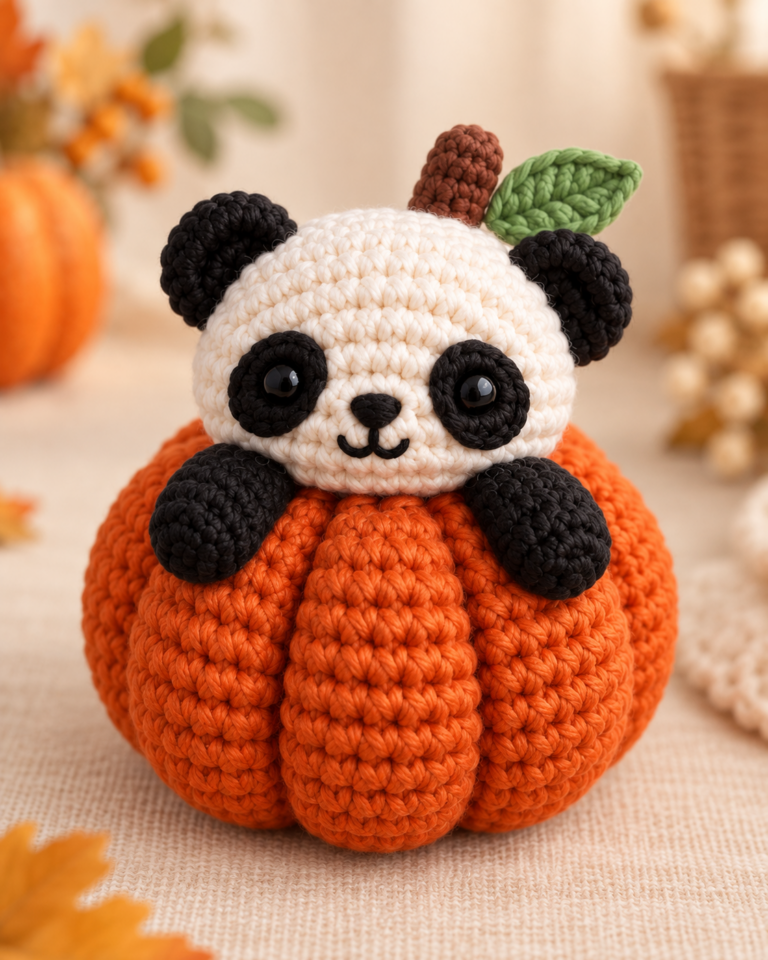

Mini panda crochet pattern free lovers, meet a tiny version made especially for quick and adorable amigurumi projects. This little panda features an oversized round head, compact body, tiny black paws, classic eye patches, and a sweet expression that fits comfortably in the palm of your hand.
Unlike our larger plush panda, this mini panda uses DK or sport-weight yarn, a smaller hook, fewer rounds, and noticeably different proportions. The result is a true pocket-sized amigurumi rather than simply a smaller copy of the original pattern.
When made with DK or sport-weight yarn and a 2.5 mm crochet hook, the finished mini panda is approximately 6–8 cm (2.4–3.1 in) tall when sitting. Your final size may vary depending on yarn thickness, hook size, stuffing, and crochet tension.
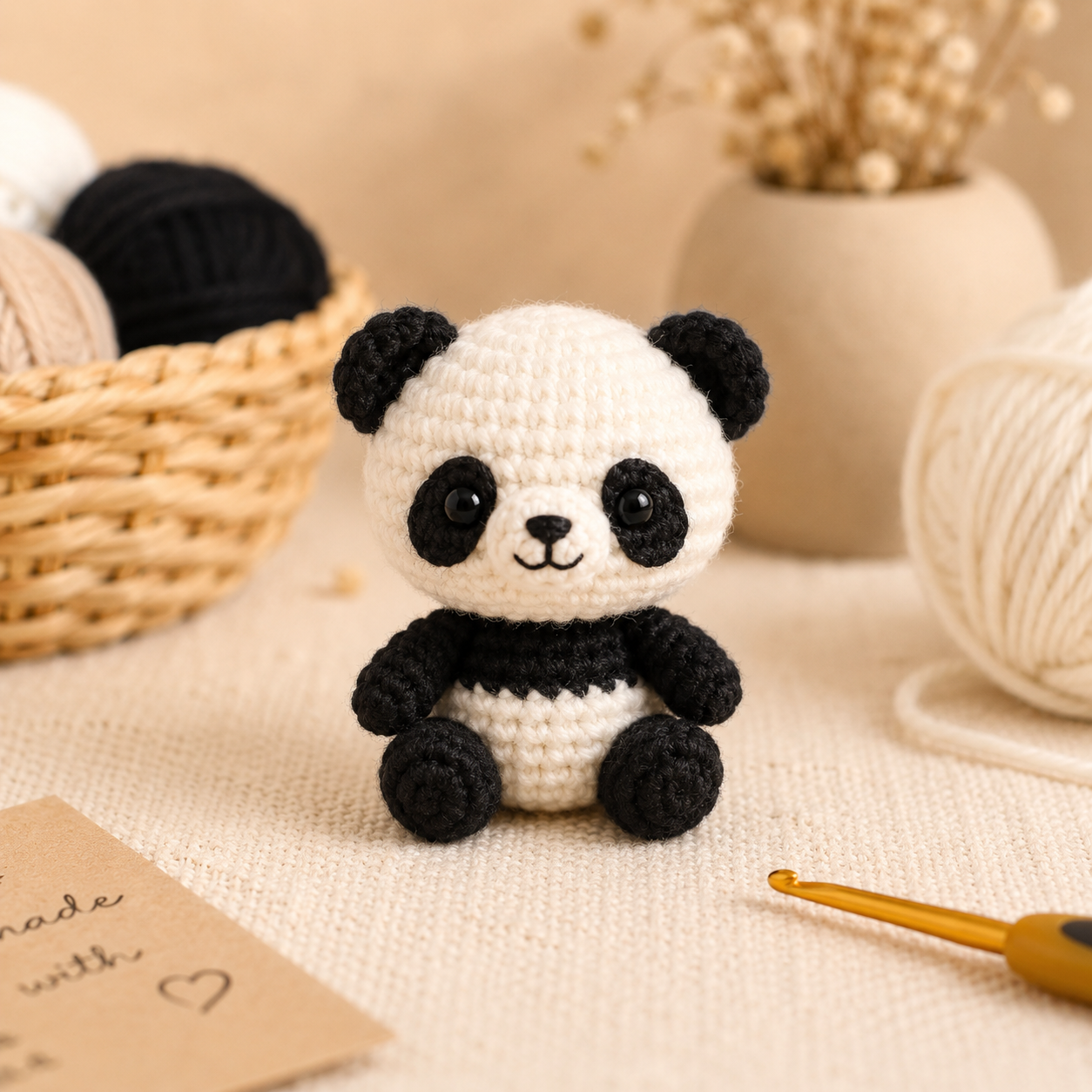
Mini Panda Crochet Pattern Free: Overview
Before starting your tiny panda, here is a quick overview of the materials, construction, and crochet skills used in this pattern.
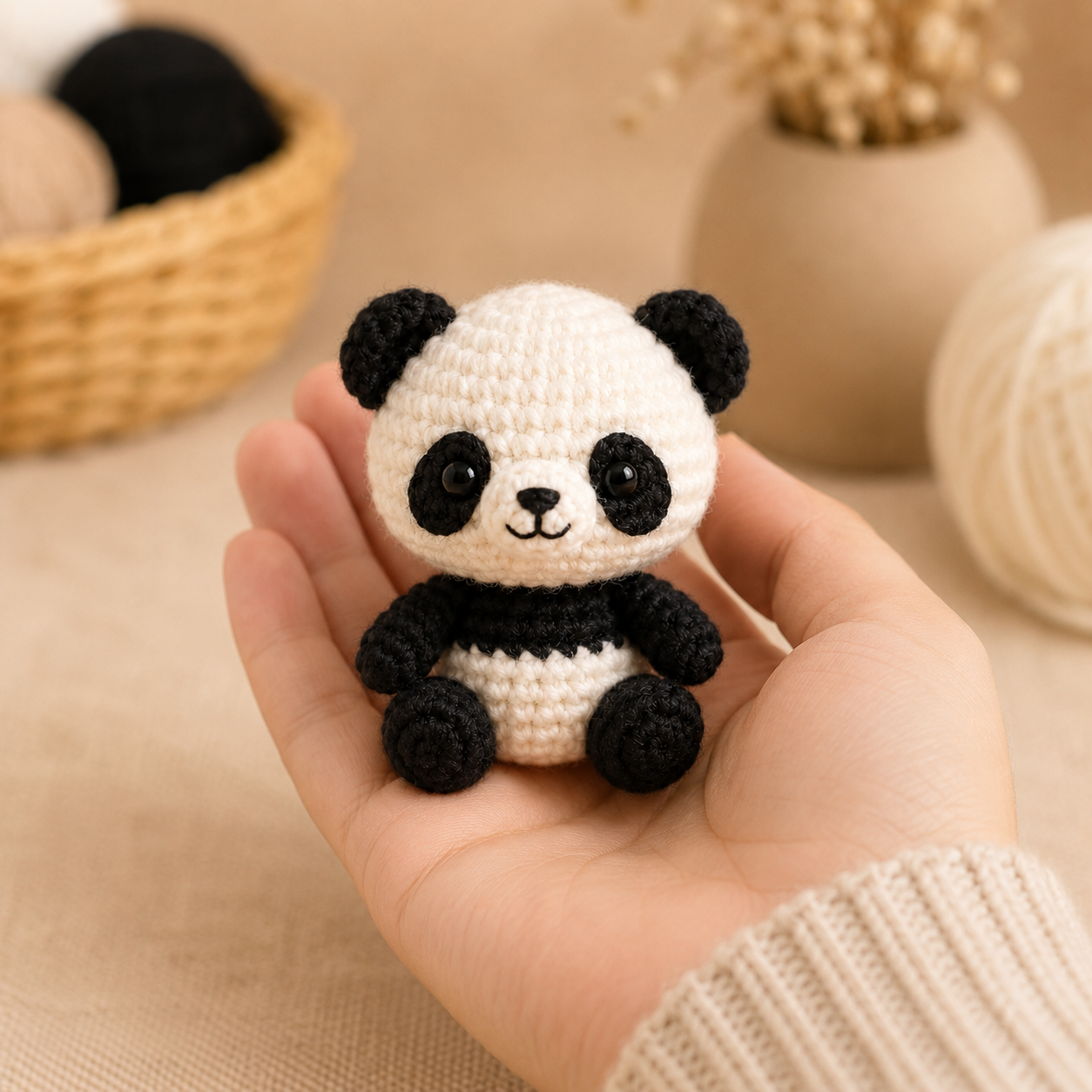
Want a larger panda? Try our Free Panda Crochet Pattern for a soft, cuddly version made with plush or chenille yarn.
Table of Contents
Why You’ll Love This Mini Panda Crochet Pattern
This mini panda amigurumi keeps the techniques simple while creating a finished project that feels noticeably different from a larger stuffed animal.
- Small enough to fit comfortably in your hand.
- Uses only a small amount of yarn.
- Simple round shapes with clear stitch counts.
- Quick project compared with larger amigurumi animals.
- Separate pieces make positioning easier before sewing.
- Compact proportions create a cute chibi-style look.
- Perfect size for small handmade gifts and desk decor.
The traditional black-and-white colors give the mini panda its classic look, but you can easily use brown, gray, pastel, or other colors to create your own tiny panda character.
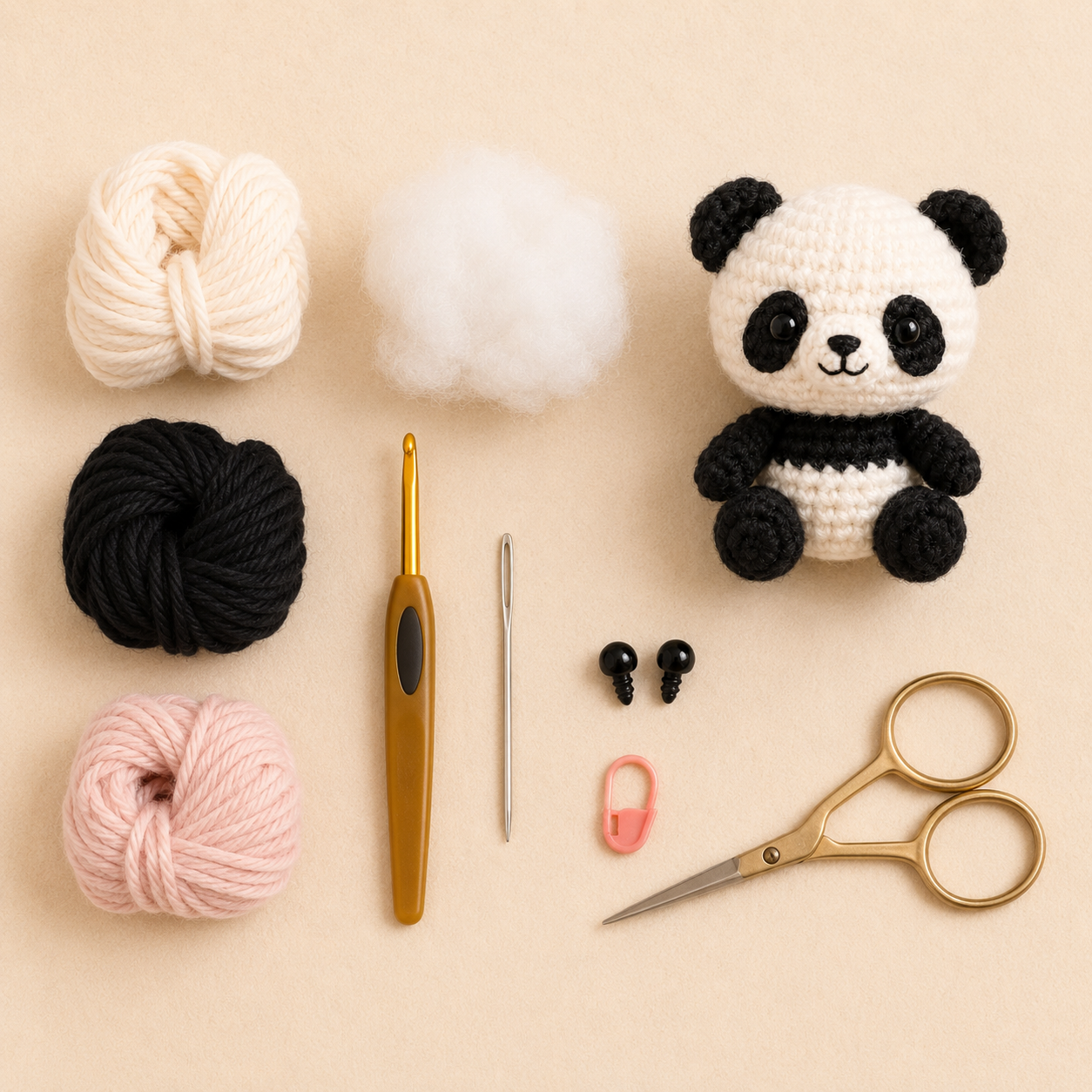
Mini Panda Crochet Pattern Materials
- White DK or sport-weight yarn — approximately 15–20 g
- Black DK or sport-weight yarn — approximately 10–15 g
- Small amount of soft pink yarn or embroidery thread — optional
- 2.5 mm crochet hook
- Two 6 mm safety eyes
- Polyester fiberfill
- Tapestry needle
- Stitch marker
- Scissors
- Pins for assembly
- Black embroidery thread for the nose and smile
Safety note: Safety eyes can be a choking hazard. If you are making this mini panda for a baby or child under three years old, embroider the eyes securely instead of using plastic safety eyes.
Crochet Abbreviations
This mini panda amigurumi pattern uses standard US crochet terminology.
| Abbreviation | Meaning |
|---|---|
| MR | Magic Ring |
| ch | Chain |
| sc | Single Crochet |
| inc | Increase — 2 sc in the same stitch |
| dec | Invisible Decrease |
| sl st | Slip Stitch |
| st / sts | Stitch / Stitches |
| FO | Fasten Off |
If you are new to crochet abbreviations, the Craft Yarn Council crochet abbreviation guide is a useful reference.
Mini Panda Amigurumi Pattern Notes
- Work in continuous spiral rounds unless instructed otherwise.
- Use a stitch marker to mark the first stitch of every round.
- Keep your tension fairly firm so stuffing does not show through.
- Add stuffing gradually rather than waiting until the very end.
- Do not overstuff the ears, arms, legs, or tail.
- Pin all pieces into position before sewing permanently.
- Because this panda is small, even tiny placement changes affect the final expression.
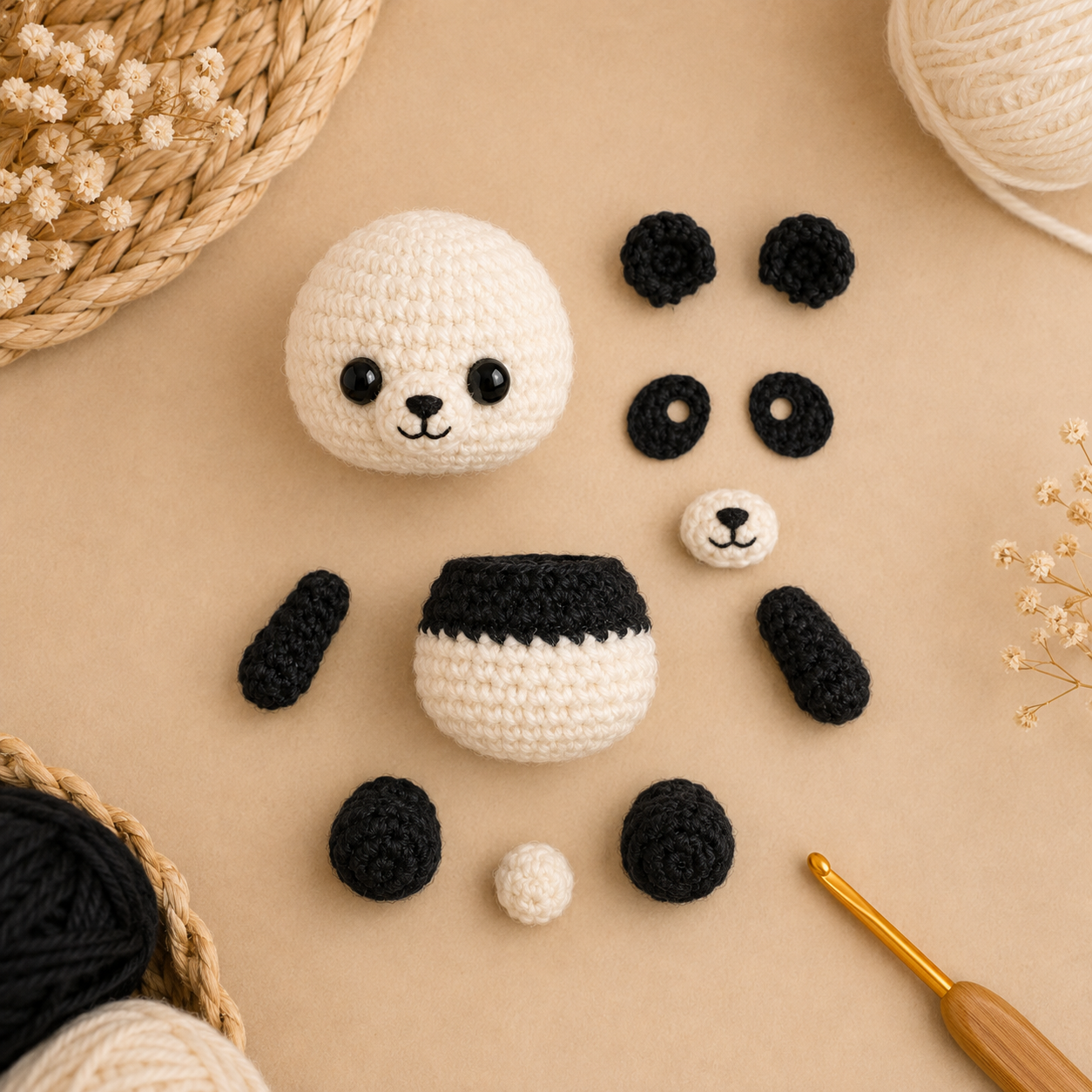
Construction: The head, body, ears, eye patches, muzzle, arms, legs, and tail are crocheted separately. This lets you adjust each piece before sewing and helps create the compact seated pose shown in the finished mini panda.
Mini Panda Crochet Tutorial: Head
Use white yarn. The head is intentionally large compared with the body to create the cute pocket-sized proportions of this mini panda.
Begin stuffing the head gradually, adding small amounts of fiberfill and shaping the head as you work. Leave enough room inside to reach the safety-eye posts and washers.
Pause before closing the head: Do not work R12–R13 yet. Continue to the eye patches and muzzle below, then install and secure the safety eyes while the opening at the bottom of the head is still large enough to reach the washers from inside.
Mini Panda Eye Patches — Make 2
Use black yarn. These small oval patches create the classic panda face while keeping the features proportional to the tiny head.
Fasten off and leave a long tail for sewing.
Crochet Mini Panda Muzzle
Use white yarn.
Fasten off with a long sewing tail.
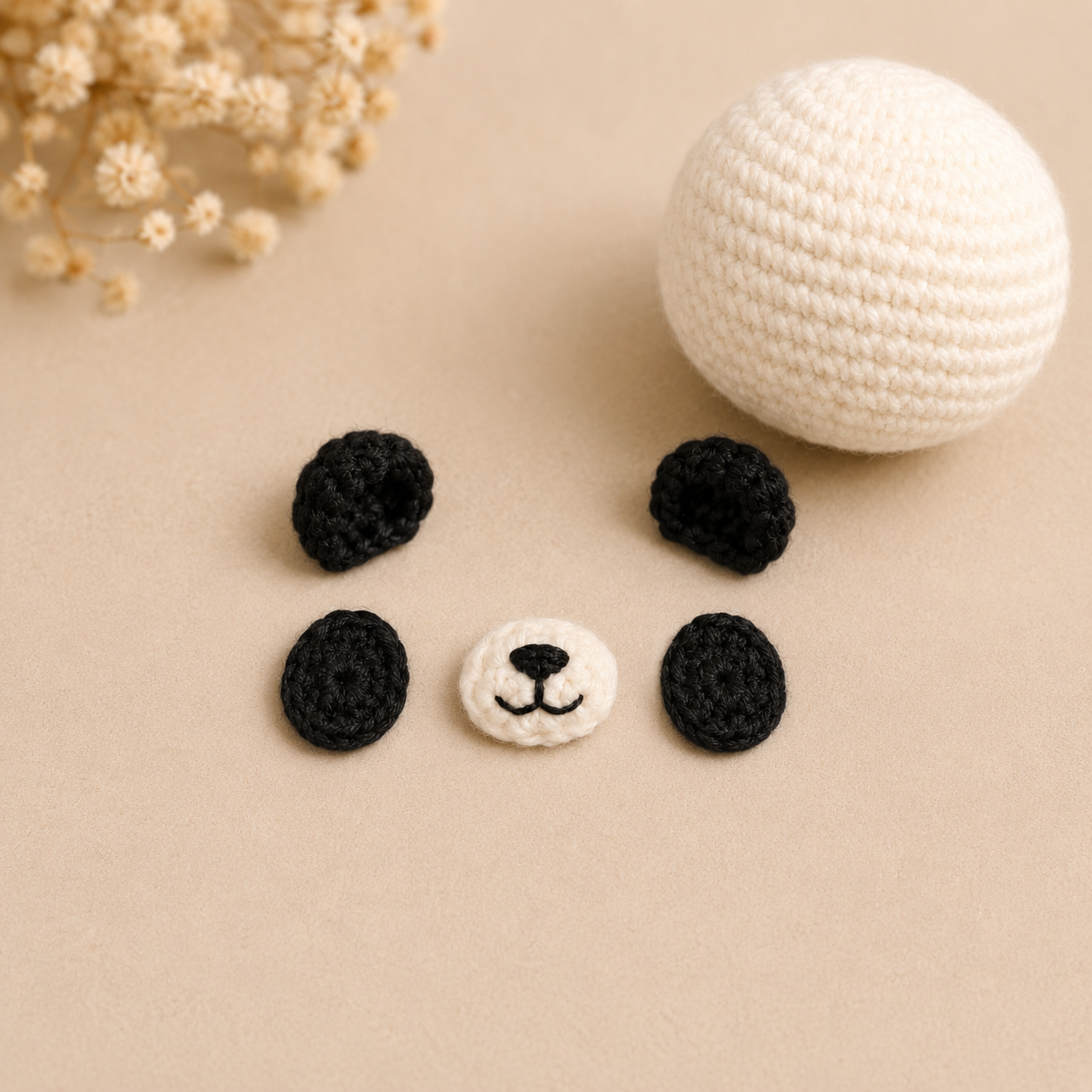
Position the Mini Panda Face
Position the black eye patches first. Insert each 6 mm safety eye through the center of an eye patch and then through the head around rounds 7–8.
Start with approximately five stitches between the eye posts and adjust slightly until the expression looks balanced. Once you are happy with the placement, secure both safety-eye washers firmly from inside the open head.
Center the muzzle below and between the eyes. Add a very small amount of stuffing beneath it if you want a slightly raised muzzle, then sew securely around the edge.
Embroider a small black triangular nose, add a short vertical line beneath it, and finish with two gentle curved stitches to create the smile.
Add Optional Blush
If you like the soft expression shown in the finished panda, add a few tiny pink stitches beneath each eye patch. Keep the blush subtle so it does not overpower the small face.
Finish the Mini Panda Head
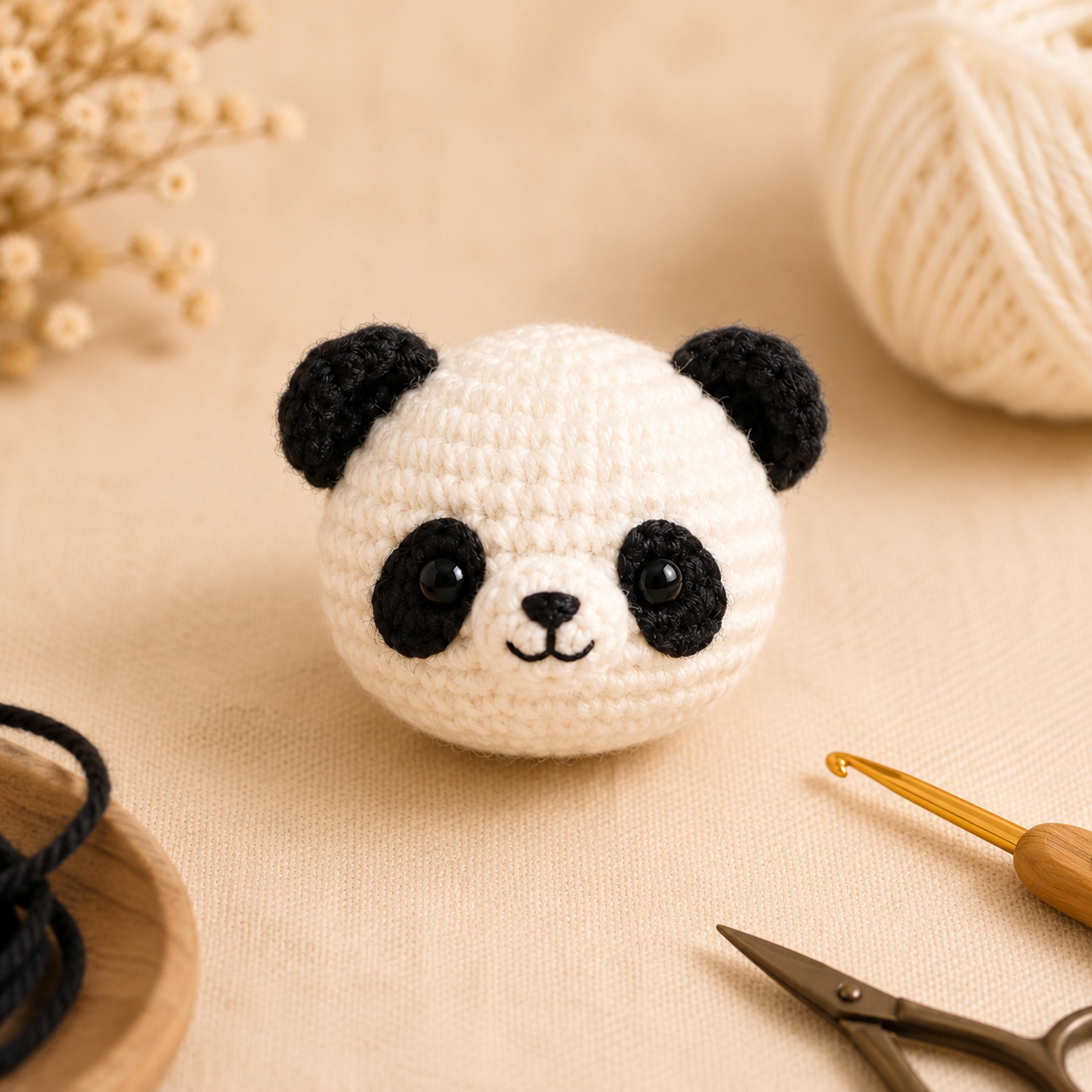
Once the eyes are secured and the facial placement looks balanced, finish stuffing the head evenly.
Fasten off, close the remaining opening, and weave in the yarn end.
Mini Panda Ears — Make 2
Use black yarn.
Fasten off with a long sewing tail. Do not stuff. Flatten each ear gently before sewing.
Mini Panda Amigurumi Body
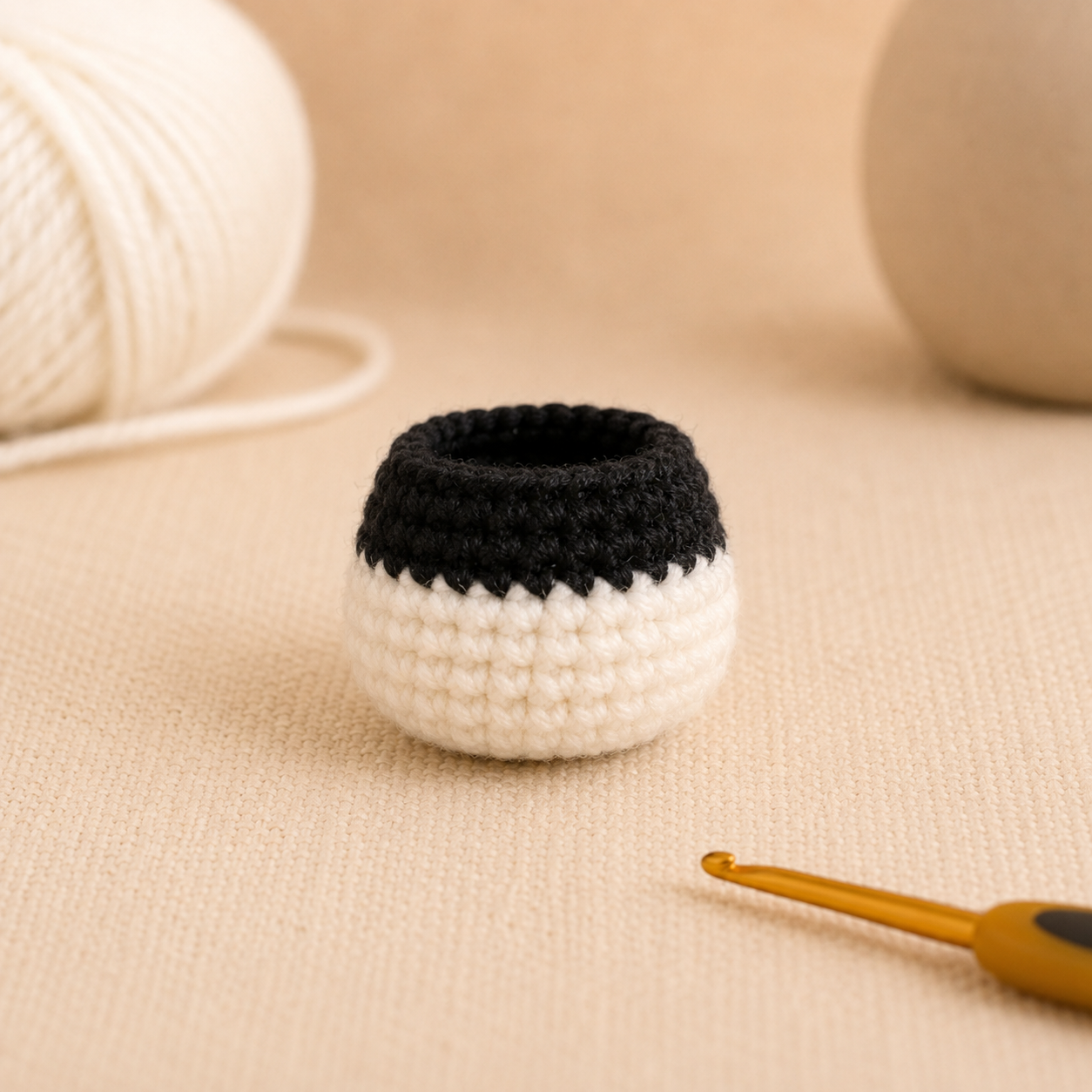
Begin with white yarn. The body is deliberately short and rounded so the finished panda keeps its compact pocket-sized shape.
Change to black yarn.
Stuff the body firmly while keeping it compact and rounded. Fasten off with a long yarn tail for sewing the head to the body.
Mini Panda Arms — Make 2
Use black yarn.
Add only a small amount of stuffing to the lower part of each arm. Flatten the opening and fasten off with a long tail for sewing.
Mini Panda Legs & Feet — Make 2
Use black yarn. These small rounded feet are intentionally more compact than the oversized feet used on our larger panda.
Stuff before closing. Fasten off with a long sewing tail.
Mini Panda Tail
Use black yarn.
Stuff very lightly and leave a long yarn tail for sewing.
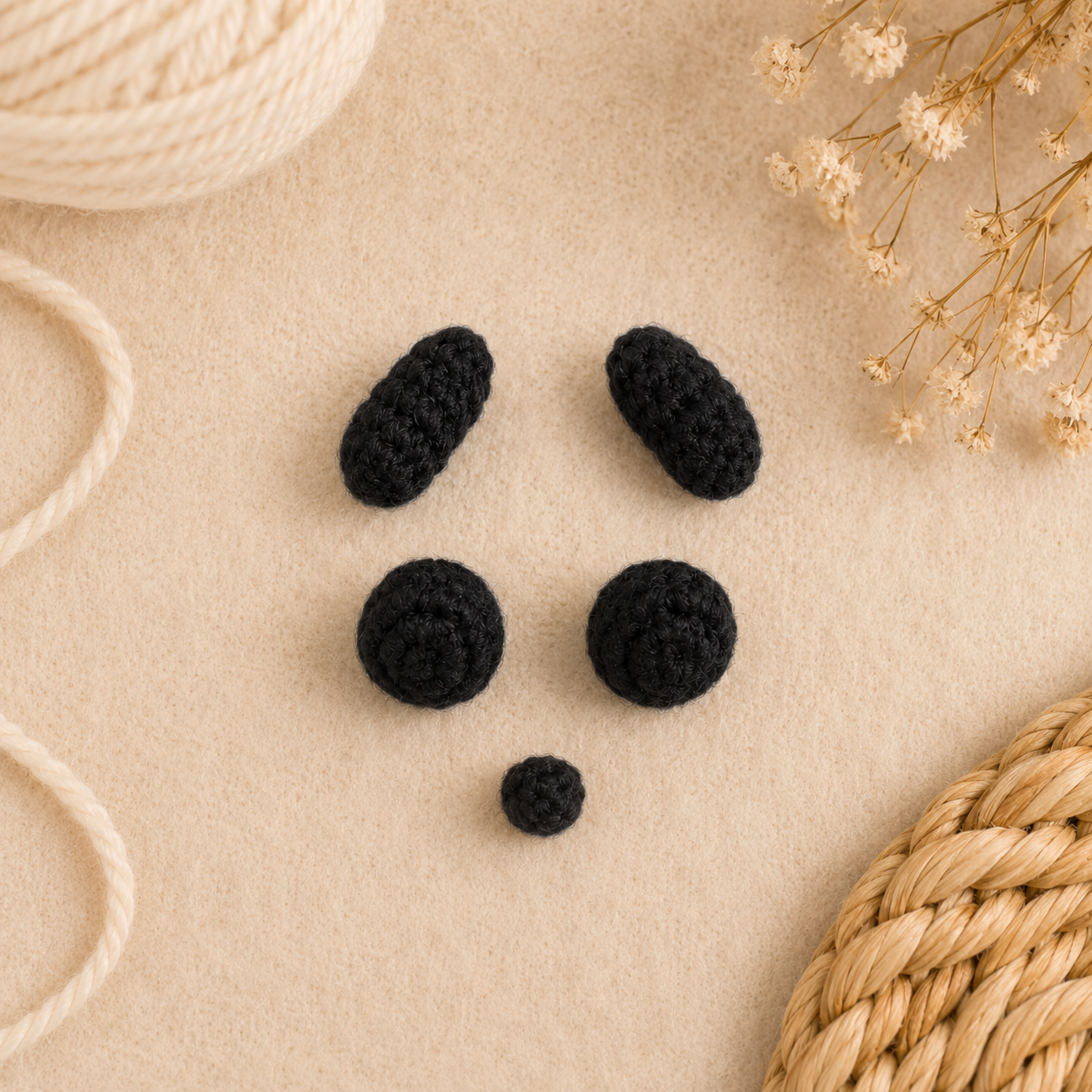
Tip: Mini amigurumi pieces can become bulky very quickly when overstuffed. Use smaller amounts of fiberfill than you think you need, especially in the arms and tail.
How to Assemble Your Mini Panda
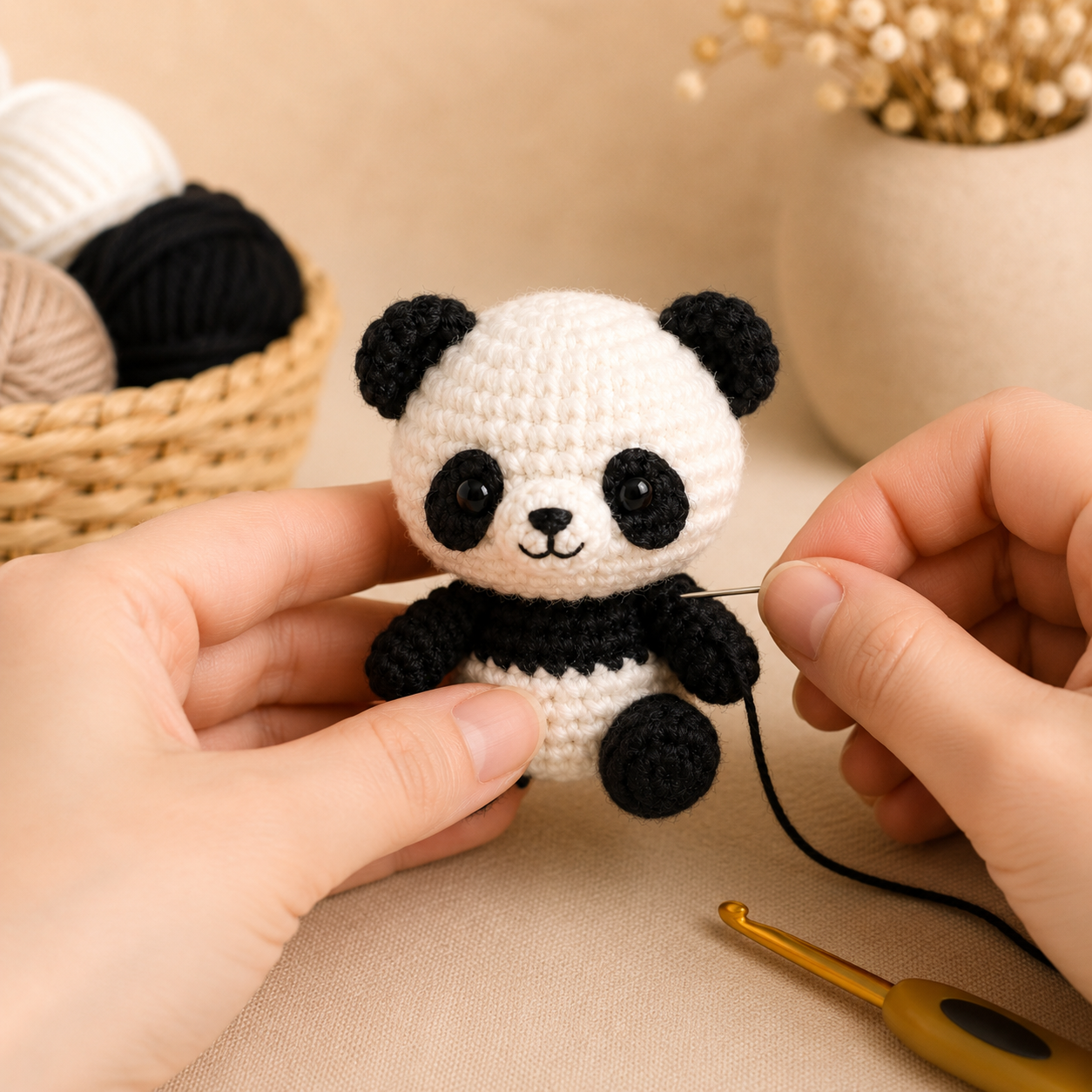
Before sewing, arrange all of the finished pieces on your work surface. Because this panda is small, even a few millimeters can noticeably change the expression or seated pose.
Finishing Your Mini Panda Amigurumi
Once every piece is securely attached, gently shape the head and body with your hands. Check the panda from the front and both sides to make sure the legs sit evenly and the head is centered.
Weave in all remaining yarn ends and trim any excess yarn carefully. If your panda leans backward, moving the legs slightly farther forward can help create a more stable sitting position.
Finished Mini Panda Size
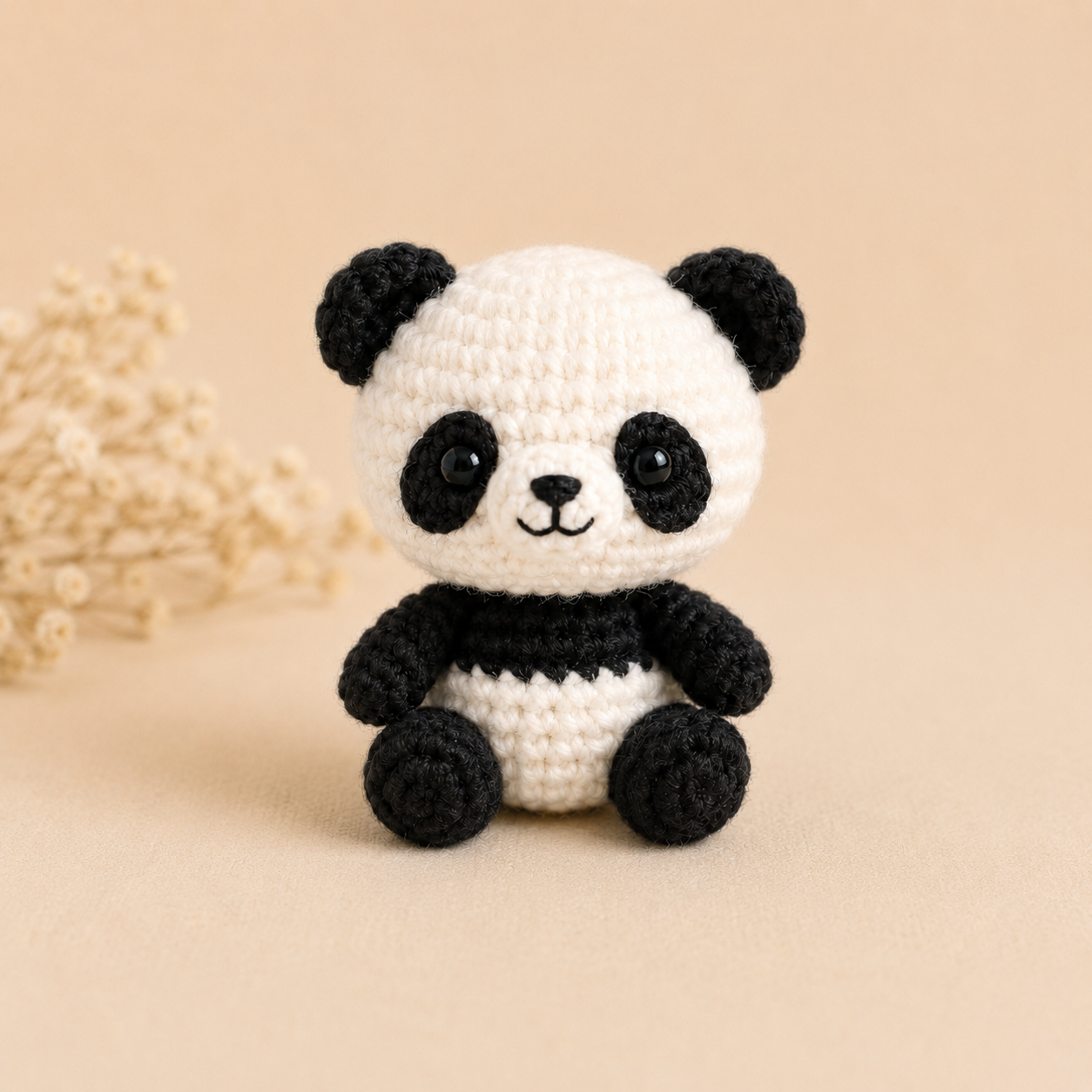
Using the recommended DK or sport-weight yarn and 2.5 mm hook, the finished panda is designed to measure approximately 6–8 cm (2.4–3.1 in) tall while sitting.
Remember that the final dimensions can change depending on yarn thickness, hook size, crochet tension, and how firmly you stuff the pieces.
Cute Gift Ideas for Your Mini Panda
One of the nicest things about a pocket-sized amigurumi is how easy it is to turn a small crochet project into a thoughtful handmade surprise.
- A small handmade birthday gift.
- An end-of-year gift for a friend, teacher, or classmate.
- A cute desk or bookshelf companion.
- A non-candy addition to a Halloween treat bag.
- A small holiday stocking stuffer.
- A handmade party favor or thank-you gift.
Keep this version simple: You can add a hanging loop or keychain fitting later, but this pattern is designed as a standalone mini amigurumi. We are keeping the actual panda keychain as a separate project in our Panda Crochet collection.
Tips for Crocheting Small Amigurumi
- Keep your stitches firm so the stuffing does not show through.
- Use a stitch marker on every round because tiny rounds are easy to lose track of.
- Add stuffing in very small amounts to avoid lumps.
- Avoid overstuffing the arms, ears, legs, and tail.
- Pin both legs in place at the same time before sewing.
- Check the face from a short distance before attaching the pieces permanently.
- If your stitches feel too loose, use a slightly smaller hook rather than pulling the yarn excessively tight.
Mini Panda Crochet Pattern FAQ
Is this mini panda crochet pattern suitable for beginners?
Yes. The pattern mainly uses single crochet, increases, invisible decreases, continuous rounds, and basic sewing. It is best for beginners who already understand how to make a magic ring and work in continuous rounds.
How big is the finished mini panda?
With DK or sport-weight yarn and a 2.5 mm crochet hook, the finished panda is approximately 6–8 cm (2.4–3.1 in) tall while sitting. Yarn thickness and crochet tension can change the final size.
Can I use worsted or plush yarn instead?
Yes, but your panda will become noticeably larger. The stitch counts can remain the same, although thicker yarn may make some of the small facial details harder to position.
Can I make the panda without safety eyes?
Absolutely. Embroidered eyes are a good alternative, especially when making the panda for babies or very young children.
Can I turn this mini panda into a keychain?
Yes. A strong hanging loop and appropriate keychain hardware can be added after assembly. However, this particular version is designed first as a standalone pocket-sized amigurumi.
Why is my mini panda larger than 8 cm?
Yarn weight, hook size, stuffing, and individual crochet tension all affect finished dimensions. Even a slightly thicker DK yarn can create a noticeably larger amigurumi.
Can I crochet the mini panda in different colors?
Yes. Classic black and white creates the familiar panda look, but brown, gray, pastel pink, sage, or other color combinations can create a completely different tiny character.